
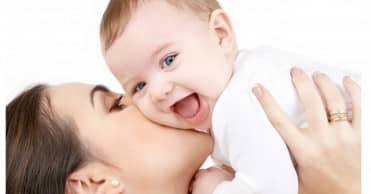
Children are the conservatives. Any change in habits or routine, the presence of the new man causes her severe stress. This may result in physical discomforts. The child loses appetite and sleep, doesn't want to play, naughty.
The first emotion of the baby with anything not mix. A disgruntled groan, a scream and a cry — the little than it can attract the attention of parents to wet diapers, hunger, thirst, and other inconveniences. Newborn adapts to new conditions: changes in temperature, too bright light, loud noise, labor-intensive way of eating, all accompanied by the rapid expression of feelings. In 2-4 months on the face of the baby appears first conscious smile. He welcomed the mother of "revitalizing complex", roughly rejoices to communication. At the age of 5-7 months, the child begins to recognize emotions of another person by the expression on his face. After six months the baby is able to "catch" the emotions of those around him, especially mom. It is the main source of joy, and her affection and care form her response — ability to love and to sympathize. At the same age to delight children and begins a new toy, and own new skills. Reached for rattles? A storm of fun!
In the field of view has a new item? But that's interesting. It is the surprise and interest — the preconditions for cognitive activity in the future. 1.5-2 years start to lay the simplest moral emotions. Praise or disapproval of adults help a child to know "what is good and what is bad." To 3 years there is an ability to enjoy the aesthetic categories — the beautiful outfit or a full-blown flower. Little fashionista is able to distinguish the really beautiful and stylish from vulgar and garish. This age is the best to enroll in educational studios, dancing, music or drawing. By 4 years old baby becomes a "pochemuchka". Generated social emotions, relationships with peers give experiences of the type "friends, he's a good — not friends, it's bad." "Pity the mother and two year old, says child psychologist Margarita Obolenskaya. But four-year-old child is able to sympathize with and show compassion for real. If in 2 years the kid will try to pull your mom from falling "alien" baby, poured tears, the child 4 years can cry together with him "for company" and try to help the victim. At this time, the emotional world of the crumbs is very rich, he expresses his feelings with words. He is ashamed, he understands the restrictions, but still cannot always control their desires. So often at this age, the children start the game in the "flagellation", "I'm bad because I behaved badly!"".

Among five-year plans conducted an experiment: put before them a box of sweets and asked in the absence of an adult to them not to touch. Obedient was promised a bonus, and still very few children were able to resist the temptation to stuff his mouth with a yummy, barely an adult hid behind the door. "But it is "steadfast tin soldier" who managed to exercise restraint in anticipation of greater rewards, will be the most successful learners — commented Margarita Obolenskaya. — They will be easier to negotiate with different people, easier to overcome difficulties, and in their chosen profession they will be a real success."
The inability to control their emotions, especially negative, extreme manifestation of which is called a passion, can lead to problems. Baby, not able to cope with taskalinsk a feeling of anger, resentment or shame, fights, scratches, cries and bites.
Reading, trips to the Museum, to the theatre, watching good children's films – this is called aesthetic education. There are special techniques to teach your child to recognize emotions, to appropriately Express and control them. 1.5-2 years your baby need a book with beautiful, eye pleasing pictures. Consider and discuss them, comparing with the text. What makes a hero and how he feels? He sad or merry? Him good or bad, and why the child thinks so? The child, analyzing the images, learning basic emotions and how they can be manifested and transmitted. Baby can Express his attitude to what he saw: Pat and kiss the image, if he likes it, and slam a book or shaded pencil unloved hero. Do not miss the emotional outbursts, maintain the child, and do not punish for damaged book.

In 4-5 years will come in handy rag doll with a "talking" person. Her eyebrows, eyes, lips fastened with Velcro, she is able to turn from sad to funny at the behest of the baby. Parental emotions associated with this or any other act of the baby, also can Express the doll so the child will easier for them to notice, understand and be able to respond to them. You can even find two such toys and to share with the baby "emotional messages". At any age, drawing is a good way to vent emotions, to cope with them. The pictures definitely need to discuss. What is the mood in drawn characters? It is important not to disturb the child who draws to himself. To convey emotion, children often use color and draw on the face of the hero grimaces or tears. Young children are very sincere and direct. They perceive the world specifically, figuratively, but tedious reasoning about abstract parents don't understand. The baby learned a new concept, with him to play. Dvuhletki telling classic tales like "Chicken little", focus on emotions, asking him to portray as cry as grandpa and grandma. The child will bring this incredible pleasure, because through the game he was able to look at the wailing (or any negative emotion) and even with her "friends". To simulate and to lose state while playing with dolls.
Children make favorite toys: if the doll falls — she's in pain. And how she cries when she is hurt? "Imitation of emotions, parents can use for educational purposes, — says the psychologist. — After 4 years of play Board theatre. Let the plot of the tale is harder than the “speckled hen”, and the kid takes the role of the good, defenseless and downtrodden characters.

Even when the kid opens the power of positive emotions, negative emotions still remain. And often they become the cause of mistakes parents.</p>
Too many "impossible"
You wouldn't like it if every gust was followed by a loud cry of a deterrent.
Too many "may"
The child needs to provide sufficient amount of fun, his inquisitive activities and — occasionally — the company. But the constant groping, a baby talk and indulging all his whims does not give the child happiness. He is very tired from such a fuss and crying. If the baby — "mommy's tail", problems will arise. Sooner or later mom will have a while to go away, leaving the baby with grandma or a sitter. But for the child it would be a tragedy. According to the psychologist, attempt to fully protect the baby from negativity can lead to what will grow timid and free-floating. Life should be a place of hardship (and, hence, unpleasant emotions that these difficulties cause). It is important to instill in the child a confidence in their own abilities and the opportunities these challenges. The kid fell? No need to shout: "Again you fell, I told you not to climb up here!" Much better to quietly help the child to rise up and say: "do not worry, you will do it".


